
The End of the World (As We Know It)
"Jesus saves us in our disasters, not from them." - Robert Farrar Capon

Psalm 98
O sing to the Lord a new song, for he has done marvelous things. His right hand and his holy arm have gotten him victory. The Lord has made known his victory; he has revealed his vindication in the sight of the nations. He has remembered his steadfast love and faithfulness to the house of Israel. All the ends of the earth have seen the victory of our God. Make a joyful noise to the Lord, all the earth; break forth into joyous songs and sing praises. Sings praises to the Lord with the lyre, with the lyre and the sound of melody. With trumpets and the sound of the horn make a joyful noise before the King, the Lord. Let the sea roar and all that fills it, the world and those who live in it. Let the floods clap their hands; let the hills sing together for joy at the presence of the Lord, for he is coming to judge the earth. He will judge the world with righteousness and the people with equity.
Luke 21.5-19
When some were speaking about the temple, how it was adorned with beautiful stones and gifts dedicated to God, he said, “As for these things that you see, the days will come when not one stone will be left upon another; all will be thrown down.” They asked him, “Teacher, when will this be, and what will be the sign that this is about to take place?” And he said, “Beware that you are not led astray; for many will come in my name and said, ‘I am he!’ and, ‘The time is near!’ Do not go after them. When you hear of wars and insurrections, do not be terrified; for these things must take place first, but the end will not follow immediately.” Then he said to them, “Nation will rise against nation, and kingdom against kingdom; there will be great earthquakes, and in various places famines and plagues; and there will be dreadful portents and great signs from heaven. But before all this occurs, they will arrest you and persecute you; they will hand you over to synagogues and prisons, and you will be brought before kings and governors because of my name. This will give you an opportunity to testify. So make up your minds not to prepare your defense in advance; for I will give you words and a wisdom that none of your opponents will be able to withstand or contradict. You will be betrayed even by parents and brothers, by relatives and friends; and they will put some of you to death. You will be hated by all because of my name. But not a hair on your head will perish. By your endurance you will gain your souls.”
“Preach like nothing happened.”
That was Karl Barth’s advice to his students in his underground (and unauthorized) preaching class at the University of Bonn in Germany in 1932.
It was his response to constant questions about what to do regarding a certain rabble rouser who was amassing political power at the time, a man named Adolf Hitler. For what it’s worth, Barth’s advice has long haunted preachers of the Gospel. How can Hitler be a nothing? How can any person or event or crisis that so undermines the proclamation of the Gospel not be worth words from the pulpit.
Barth believed that we preachers don’t know well enough what to say about what happens in the world, and the more we think we know what we need to say the more we wind up preaching the idols that Jesus calls us to cast away.
In other words, Barth instructed his students to preach like nothing happened because by stick with the texts of scripture, rather than chasing every single newspaper headline, they would let God get the final Word because God is the final Word.
Even still, as Hitler’s power grew in strength, Barth’s young seminarians worried about how the church could speak any Word whatsoever.
And Barth famously said, “The little man in Berlin is not the Lord of history. Inform him, if you’d like, the Lord of history is a crucified Jew from Nazareth named Jesus.”
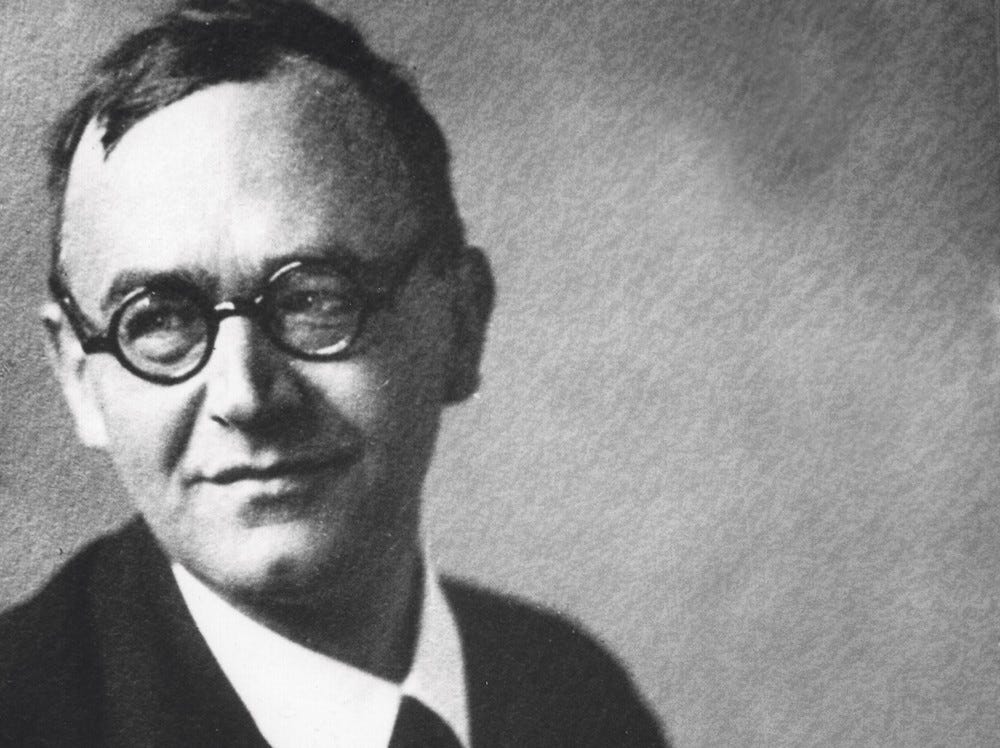
Barth did not believe the events of his days were unimportant, only that the greatest day in history had already taken place, namely Easter, and by it all other days are made intelligible.
Barth also said, “We are in this mess because our witness has become so muddled we can no longer tell the difference between the nation and the Kingdom of God. Anybody can see what the little man in Berlin is a threat to everything Christians hold dead. More difficult is to see how idolatry, failure to worship, confusion of culture and patriotism with Christianity, and timid biblical interpretation made Hitler’s movement possible. Most difficult of all is to see the Church as God’s answer to what’s wrong with the world. The Church is called to be a showcase of what God can do, a people whose lives tell the truth that the world can never tell itself. Bear witness!”
Preach like nothing happened, and God’s will speak what needs to be said.
Within a year of speaking such sentiments, the entire faculty of the University of Bonn was required to pledge allegiance to the Fuhrer, Adolf Hitler, at the beginning of each class session. And, every single professor and faculty member did so with one exception: Karl Barth. He got away with it for a little while, seen as the radical among the teachers, until the powers and principalities intervened, firing Barth from his position with the University.
It was the end for Barth. His academic career came to a grinding halt, his books were banned and burned, and he was forbidden to speak publicly. The stones that held up his vocation came tumbling down. And it was all because he believed the Lord of history wasn’t a little man in Berlin, but a crucified Jew from Nazareth named Jesus.
Before that Jew from Nazareth was crucified, he walks with the disciples in Jerusalem and one of them, probably Peter, makes some offhand comment about the beauty of the architecture and the enduring testament of the Temple.
And Jesus says, “Listen, you see all the stuff, the ramparts and the walls? The guards pacing back and forth? The lines of people coming in to present their gifts to God? All of this is going to disappear. All of these stones will come crashing down and there’s nothing anybody can do about it.”
This is a shocking word from the Lord who previously waxed poetic with parables of publicans and samaritans, who healed the sick and fed the hungry, who commanded the crowds to love the Lord their God and their neighbors as themselves.
Now Jesus gets revolutionary. He points right at the symbol of faith, the unassailable fortress of religion, and says “It’s just dust.”
Immediately the disciples lay into Jesus with questions about the end. “How can you say it’s nothing? How will we know this is to take place? What signs will there be?”
Jesus says, “When things start to tear at the seams, be careful that you are not led astray. There’s going to be a whole lot of people who claim to be me or, at the least, be on my side. One day there will be televangelists who profit from fear mongering in my name; don’t listen to them. They wouldn’t know the Good News if it hit them in the face.
“When you hear about wars and even rumors of war, don’t be afraid. These things have always taken place and they will happen again. Nation will rise against nation and kingdom against kingdom. And don’t even get me started on the natural disasters like earthquakes, famines, and floods.
“And, unfortunately, you’re going to get arrested, and persecuted, and knocked down because of me. The powers and principalities can not and will not stand those who tell the truth in a world of lies. You’ll lose jobs, families, and even fortunes because of the gospel. But don’t worry, it will be an opportunity for you to bear witness and testify.
“So do me a favor, and don’t waste any time coming up with the perfect speech or the most effective modes of evangelism. I will give you the words and the wisdom that none who are in power will be able to handle. I’ll give you a new song to sing.
“It’s not going to be easy and its going to get worse before it gets better, but don’t take it personally. When people revile you and belittle you and forsake you, it’s really me who they’re angry with but in the end all will be well - I promise. Without those who are willing to live according to the hope of a better future, the world is doomed to remain as it is, and I have conquered the world.”
Here, on the second to last Sunday of the church year, with Christ the King and Advent on the imminent horizon, Jesus goes apocalyptic. And, of course, much has been made of his words, doomsday clocks and street corner preachers. Fear has been used as a motivator for the Gospel - the Roman road has been touted out in front of teenagers demanding their confession of Christ as Lord otherwise face the consequences, new parents have been guilted or terrified into bringing their babies to the baptismal font, and even preachers have used incendiary words to stoke the flames of perdition to get their congregations into action.
But that’s not the Gospel, and that’s not what Jesus says in Luke 21.
Jesus paints a picture not of the nightmare that can be, but instead he points to a hope that sets us free.
The world’s passion is taken up in Jesus’ passion, Jesus draws all things into himself on the cross. What we so often miss, and what the church has often overlooked, is that the Gospel has consequences. Not because if we don’t do something something bad will happen, but because of what Jesus does all of the somethings get caught up in a new thing.
In other words, the end isn’t near, it’s already here.

Our faith is founded on the promise that we have already seen “the end,” that the old world came to a decisive crisis in the life, death, and resurrection of Jesus and we now live on the other side of the end.
In Jesus’ death and resurrection we believe that the whole history of the cosmos reached a turning point. At that moment, on the cross and from the tomb, the conflict between life and death, good and evil, past and future, was forever reconciled in Jesus.
We know the end because we know Jesus Christ and him crucified. We read the last chapter before the introduction. We hear the postlude before the prelude.
And so, when Jesus speaks to his friends and disciples, when he goes apocalyptic, he is offering a promise. Sooner or later the world is going down the drain. The stones fall down. Just pick up a newspaper, or look at your phone, and you can read and see exactly what Jesus describes. But as the world spins down the drain, the proclamation of the Gospel is that only a Savior who is willing to work at the bottom can do anything about it.
As Robert Farrar Capon put it, “Jesus always comes to us in the brokenness of our health, in the shipwreck of our family lives, in the loss of all possible peace of mind, even in the very thick of our sins. Jesus saves us in our disasters, not from them.”
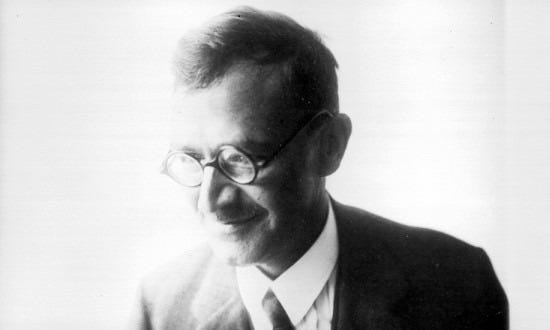
When Karl Barth was fired from the University of Bonn, when his books were burned and he was banned from speaking in public, he returned to his home nation of Switzerland where he was offered a new teaching position at the University of Basel. For ten years he taught in the university as he watched the nation rise up against nation during World War II. For ten years he preached that there is only one Lord and his name is Jesus. For ten years he pointed to the impossible possibility of the Lord who makes a way where there is no way, who provides a peace in the midst of violence, who embodies the truth in a world of lies.
And then, in 1946 after a decade of devastation, Barth was invited back to the University of Bonn, the institution from which he was fired. He was asked to offer a series of lectures on the Apostles’ Creed for those who would serve the church after the war. For the first few days he gathered with the young theologians at 7am among the ruins of the university, and they would often have to take breaks because the reconstruction work was so loud nobody could hear anything. And, in typical Barthian fashion he would launch into his lectures without preamble and the students would frantically try to keep up. But then, one morning, Barth decided to ditch his lecture notes, and he told the students that from that point forward they would begin each day with a hymn, so they could remember their hope among the ruins.
We’ve always been a people who sing. Singing amidst the ruins is not an act of naivety, it’s an act of defiance. Singing around rubble isn’t foolish, its faithful. It’s standing firm on a foundation of hope even when everything screams the contrary.
I went to the Mockingbird Conference this weekend in Charlottesville, VA and when we gathered in the sanctuary of Christ Church, the senior rector Paul Walker spoke on the theme of the conference “Anchored by Grace.” He said: “We gather tonight in the sanctuary, but we actually have another word for this space: the nave. It comes from the latin for ship or boat. It’s where we get the English word Navy. This is because the earliest Christians were persecuted and the primary symbol of the faith, the cross, indicted those who followed Jesus. Therefore, they found a different symbol, namely a ship because the mast is also a cross but it would not necessarily identify anyone in a way that would result in martyrdom. Which means, whenever we gather in this space, we do well to remember that we are on a ship. We, of course, bring all sorts of things with us to this particular vessel, our fears and longings, our anxieties and hopes. And that is why Jesus is our anchor. No matter what storms we encounter in this life, we need an anchor that can hold fast no matter what. And, best of all, we don’t have to hold onto our anchor because he holds onto us.”
We were then asked to stand to sing so that we remember we have hope even in the midst of the storm (a very Barthian sentiment!). And when we grabbed our hymnals I almost dropped mine because the hymn we lifted up was the hymn I was already planning to end this sermon with. And so, hear these words:
“When darkness veils his lovely face, I rest on his unchanging grace. In every high and stormy gale, my anchor holds within the veil. On Christ the solid rock I stand, all other ground is sinking sand; all other ground is sinking sand. “
Wars and rumors of war will come. Institutions will rise and crumble. Families will grow and fall apart. And even though the world will change, we can hold fast to one another and the truth, because Jesus holds fast to us and we know how the song ends. Amen.
Lovely words, brother 👏 I'm sorry I missed you in Charlottesville; I wasn't able to make it. By all appearances, it looked like another grace-filled gathering.