
Now What?
Or: Faith Is An Adventure

Matthew 28.16-20
Now the eleven disciples went to Galilee, to the mountain to which Jesus had directed them. Whey they saw him, they worshiped him, but they doubted. And Jesus came and said to them, “All authority in heaven and on earth has been given to me. Go therefore and make disciples of all nations, baptizing them in the name of the Father and of the Son and of the Holy Spirit and teaching them to obey everything that I have commanded you. And remember, I am with you always, to the end of the age.”
To the confirmation class at Raleigh Court United Methodist Church: Grace and peace to you from God our Father and the Lord Jesus Christ.
On this, the occasion of your confirmation, I have decided to write you an epistle rather than offer a typical Sunday sermon. For, there is no way you can possibly comprehend what is about to happen to you and maybe one day you will come back to these words in at attempt to comprehend the incomprehensible.
Perhaps this sounds a bit dismissive, that your confirmation is beyond you comprehension. And yet, faith is a wild and wily endeavor. It’s only something you can figure out while you’re figuring it out. Which is why faith is an adventure! We never really know what the future holds, only that God holds the future.
Case in point - the end of Matthew’s Gospel.
On the day of Easter, when Jesus rises from the grave, he promises the disciples that he will be waiting for them in Galilee. And so Jesus makes good on his promise to be where he says he will be. The eleven make their way to the mountain and when they see him, they worship and they doubt.
The man they followed to the bitter end did not actually experience an end, but even still they can quite grasp the whole thing.
Nevertheless, Jesus conveys the authority he embodies to these nobodies and they are commissioned for the mission of God in the world. “You’ve got to get out there,” He says, “You will be a sign to the rest of the world, a witness to the wonder of the Word, of what it means to be different and holy. Through the power and sacrament of baptism, you will be caught up in the adventure of faith through the strange gift called the church.”
And then, with his final words to the disciples, he makes a promise. I like to call it the Kenobi Covenant after Obi-Wan Kenobi who borrows Jesus’ words at the end of A New Hope: “Remember, the Force will be with you, always.”

Except Jesus doesn’t just promise that some external presence will remain; he, himself, is the presence and the promise. No matter where you go, no matter what you do or leave undone, I will never leave you.
It’s just five verses here at the end of the Gospel, and they contain multitudes. When it comes to being confirmed in the church, it’s like all of these verses are happening all over again.
Which makes some weird sense because, as Karl Barth reminds us, we can only ever repeat ourselves. But, by repeating ourselves, by being habituated into and by Jesus, we become we what are called to be.
For that matter, it’s not just the occasion of your Confirmation in which these verses are re-enacted. Every single Sunday is like the end of Matthew’s Gospel.
We show up at the place where Jesus promises he’ll be: Church. Where we bring with us all of our faith and all of our doubt, all of our wonder and all of our worry, all of our mountaintops and all of our valleys. Jesus speaks to us through words and deeds as we are commissioned for the mission. We experience the power of God through the church and particularly through the sacraments. And we are given the promise of the Good News of the Gospel.

Everything in your Confirmation journey has led to this, and everything in the life of faith for all of us leads to this.
Again, faith is an adventure. Adventures are meant to be exciting, and terrifying, and exciting all over again. Along this adventure we have tried, of course, to teach you the same things that Jesus teaches the disciples, and the disciples teach other disciples.
Things like the strange new world of the Bible, ancient creeds, liturgical traditions, methods of spiritual formation, the sacraments, the mission of God in the world, on and on and on.
But underneath, and above, and within all of the things we shared, there is one important element: The grammar of grace.

Grammar is the structure, the nuts and bolts, beneath a language - the means by which meaning is made. And, most of the time, we learn grammar without even realizing it, it’s the invisible architecture that holds everything together.
The same is true of grace. If there is a force in our world akin to what Obi-Wan shares with Luke, it is grace. Grace surrounds us and penetrates us, it binds all things together. It’s so omnipresent that there are many moments we don’t even realize it’s there, but without it we have nothing.
Grace, to put it more specifically, gives us a way to be in the world where failure doesn’t not end in shame, suffering does not lead to rage or despair, a death isn’t the end. Without the grammar of grace, we become a bunch of babblers who babble on and on about nothing, or worse, we fail to see the promise of the Gospel.
The church exists to teach people this grammar, people like you, so that when all is said and done, you become fluent in the language.
And yet, like I shared with all of you during the confirmation retreat, there’s a better than good chance that you won’t remember much, if not most, of what we shared along the journey. But that’s okay, the disciples couldn’t remember it all either. It’s why they worship and doubt when they see Jesus on the mountain after Easter. It’s why they ask so many questions over and over and over again.
God never stops sowing the seeds of grace, even if way too many of those seeds land on the sidewalk.

The life of faith takes a life. There’s a reason we keep coming back to church week after week after week - it’s to remember who we are and whose we are, to hear the promise that we liable to forget.
So even though you won’t remember a lot of the content, I do hope you remember how it felt.
I hope you remember the feeling of being together week after week, cracking jokes or turning bright red whenever Eric or I called you out for what you said.
I hope you remember strangely sitting in the Junior High Sunday School room, trying to balance the chairs on your heads while we talked about super serious things like The Wesleyan Quadrilateral and The Social Principles.
I hope you remember the taste of bread and cup next to Stiles Falls when we went on our hike at Alta Mons.
I hope you remember the sound of the songs we sang by the campfire.
I hope you remember huffing and puffing as you played tag out in the field for hours.
I hope you remember the confusion of worshiping with the good people of St. Andrew’s Basilica.
I hope you remember laughing, a lot, with every new revelation about the people sitting beside you and the One who made it all possible.
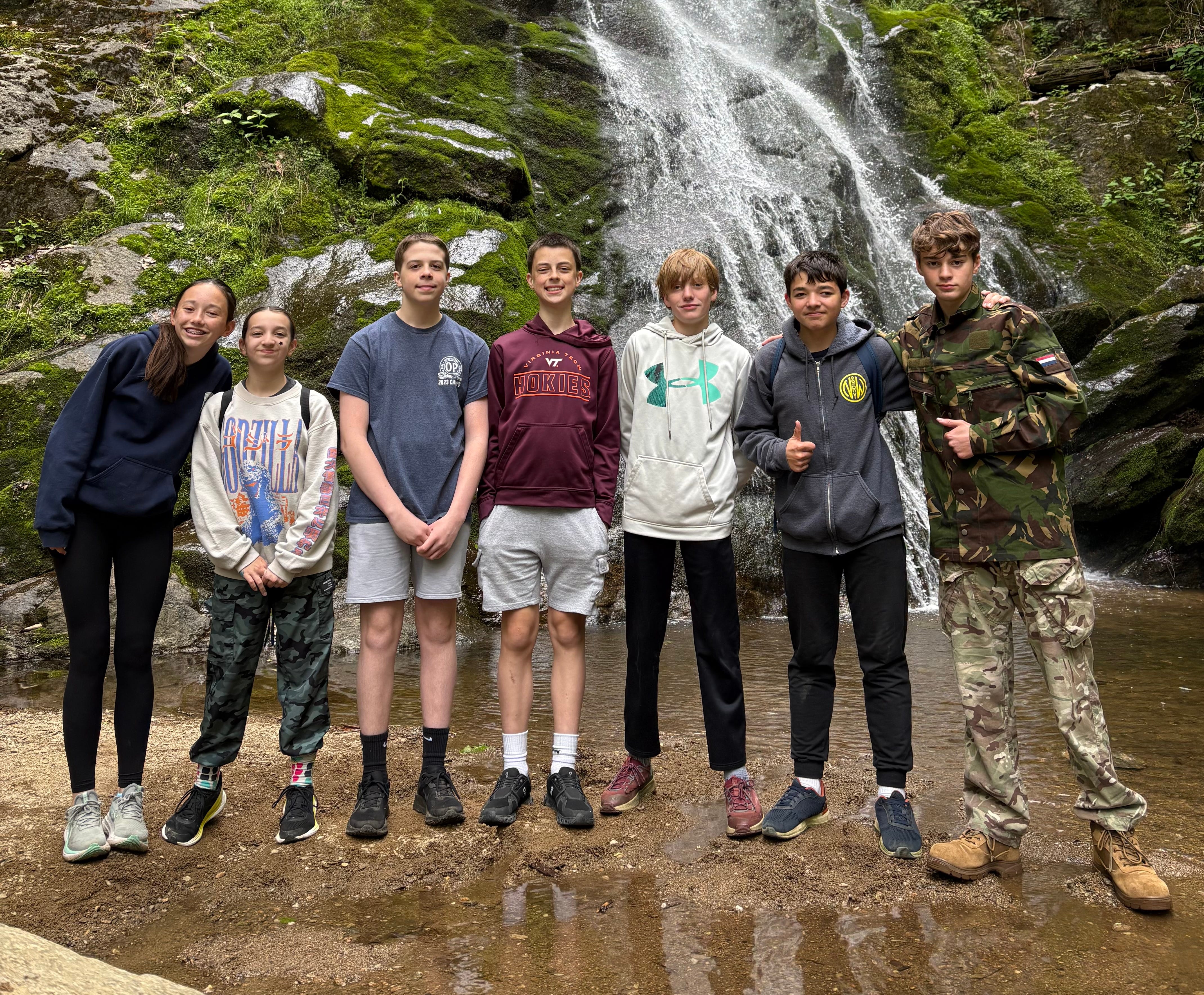
I hope you remember those things because they are the marks of faith. They are the type of the things the earliest disciples had to hold onto as they went out in the world with the Good News of the Gospel. They are the types of things that undergird the life of faith as you go forward from this place on this day.
Listen - the grammar of grace isn’t about maximizing your morality, the world will tell you to do plenty of that. It’s not about perfecting your potential, or increasing your influence, or validating your virtue.
The Gospel into which you are being incorporated, the grammar of grace that supports your very being, is not a program, posture, or performance.
The Gospel is a promise, and a very counter-cultural one at that.
Are you ready for it? The Gospel says, you are not the hero of the story. That might sound weird, uncomfortable, or even wrong right now, but in time you will come to receive it as the greatest news you will ever hear.
You don’t have to save yourselves because Jesus already did. Because of what happened on a hill far away, on a old rugged cross, the structure of the cosmos was transfigured forever.
The Gospel is not a list of doctrinal decrees or creedal confessions. It is, instead, the gift of God in the person of Jesus Christ through the power of the Spirit. The Gospel, again, is a promise. The promise, that Jesus is always with us.
Stanley Hauerwas once said that whatever Christianity is, it is at least the discovery of friends we did not know we had.
I think you’ve come to know this as Gospel truth since, when we started this journey you all sat quietly every week, and now you talk constantly! And part of that talking is this new language, the language of faith while is built on the grammar of grace.
We said, throughout this confirmation adventure, that Baptism is God’s way of saying “Yes” to you, and Confirmation is our way of saying “Yes” back to God.
But the simplicity of that sentence betrays the confounding nature of confirmation. Saying “Yes” to God means being caught up in this cosmic story, it means receiving friends you did not know you had, it means having faith and doubt, it means being sent into the world so the world knows there’s an alternative to the world, it means knowing, deep in your bones, that Jesus is with you always.
And even though you will be confirmed individually, it can only take place with and by other people.
It’s no accident that when you kneel at the altar I, Eric, your family, your mentor, and your fellow confirmands will lay our hands upon you. It’s not an accident that the whole church covenants to surround you and support you with a community of love, grace, and forgiveness. It’s no accident that the promise Jesus shares on the mountain in Galilee is the same promise you receive today.
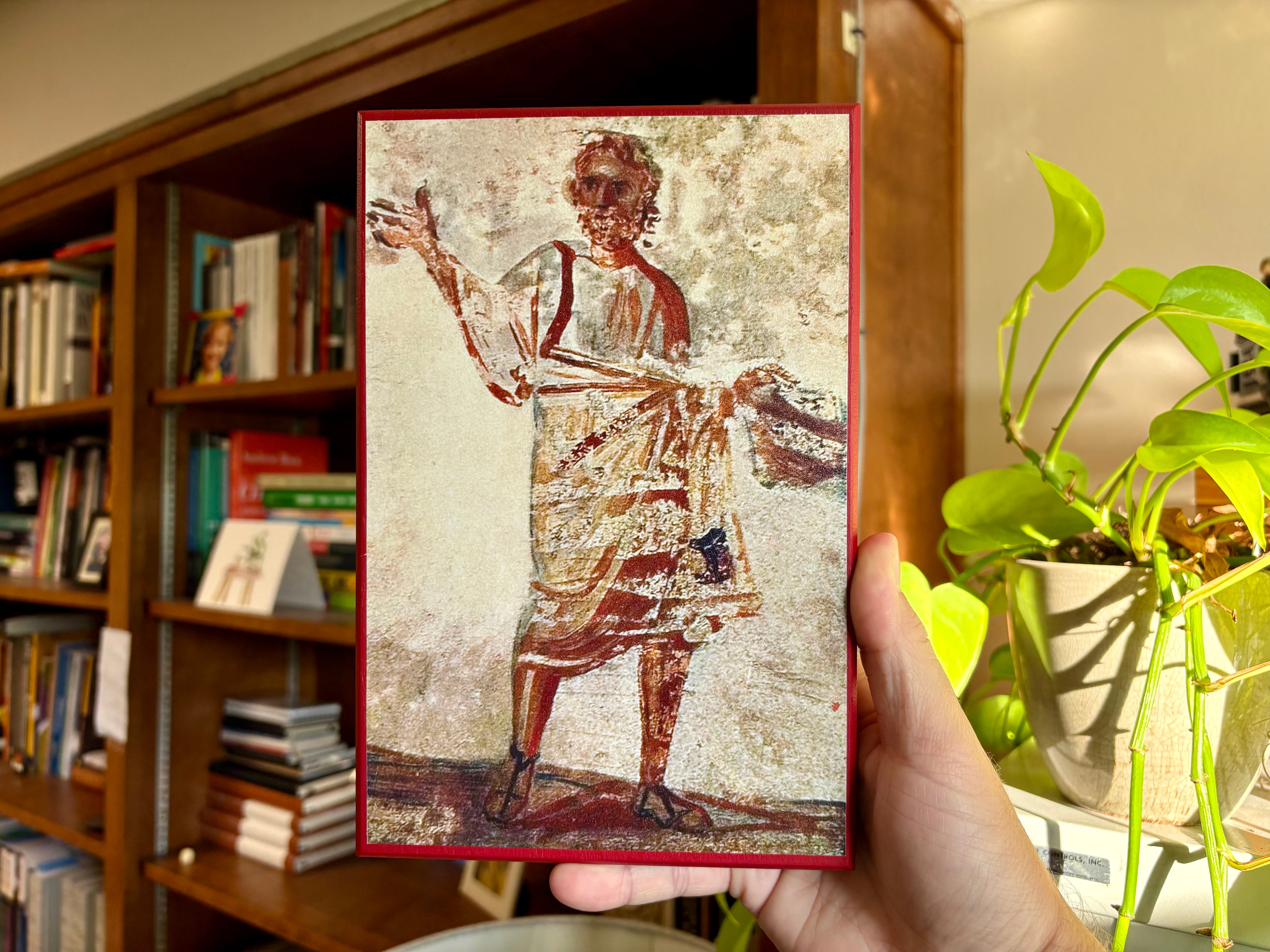
Eric and I thought long and hard about what kind of gift to give each of you on the occasion of your confirmation. I made the case for buying you books about grammar but I was outvoted. Instead we are giving each of you an icon. It’s originally from the Roman Catacombs and it’s on of the oldest icons we have of Jesus.
It is Jesus as the Sower who is scattering seeds of grace all over the place. It is a celebrated image in the church, and for good reason: it’s a reminder that God is never done with anyone. Yes, God it like the prodigal parent looking down the road waiting to throw us a party at a moment’s notice, God is like the shepherd who goes off in search of the one who is missing leaving the ninety-nine behind, but God is also like a sower who gives us exactly what we need.
Now what? That’s what the disciples must be asking themselves when they gather with Jesus on the mountain in Galilee. Perhaps that’s the question you’re asking now that you’ve made it to the end of your confirmation adventure.
Here’s the answer: no matter where life takes you, no matter what mountaintops or valleys you experience, no matter what you do or leave undone, whether you have blessed assurance or devastating doubts, so long as there is a church, there is a community of grace for you. And for all of us. Thanks be to God. Amen.